
Game design
Dish Kyaoon
- Role
- Game designer
- Scope
- Mechanics & content
- Collaboration
- Visual designer
- Context
- Tabletop card game4–8 players · Ages 13+
TL;DR
Dish Kyaoon is a tabletop cooking card game designed to build confidence to experiment with food. I worked with a visual designer at Ladyfingers Co. to develop it for Savage Cabbage. It asks friends to invent dishes from the ingredients they have, adapt to changing situations, and name and pitch their creations to the Dish Don. The work spanned mechanics, storytelling, playtesting and physical game assets. The released game is shown in play below.
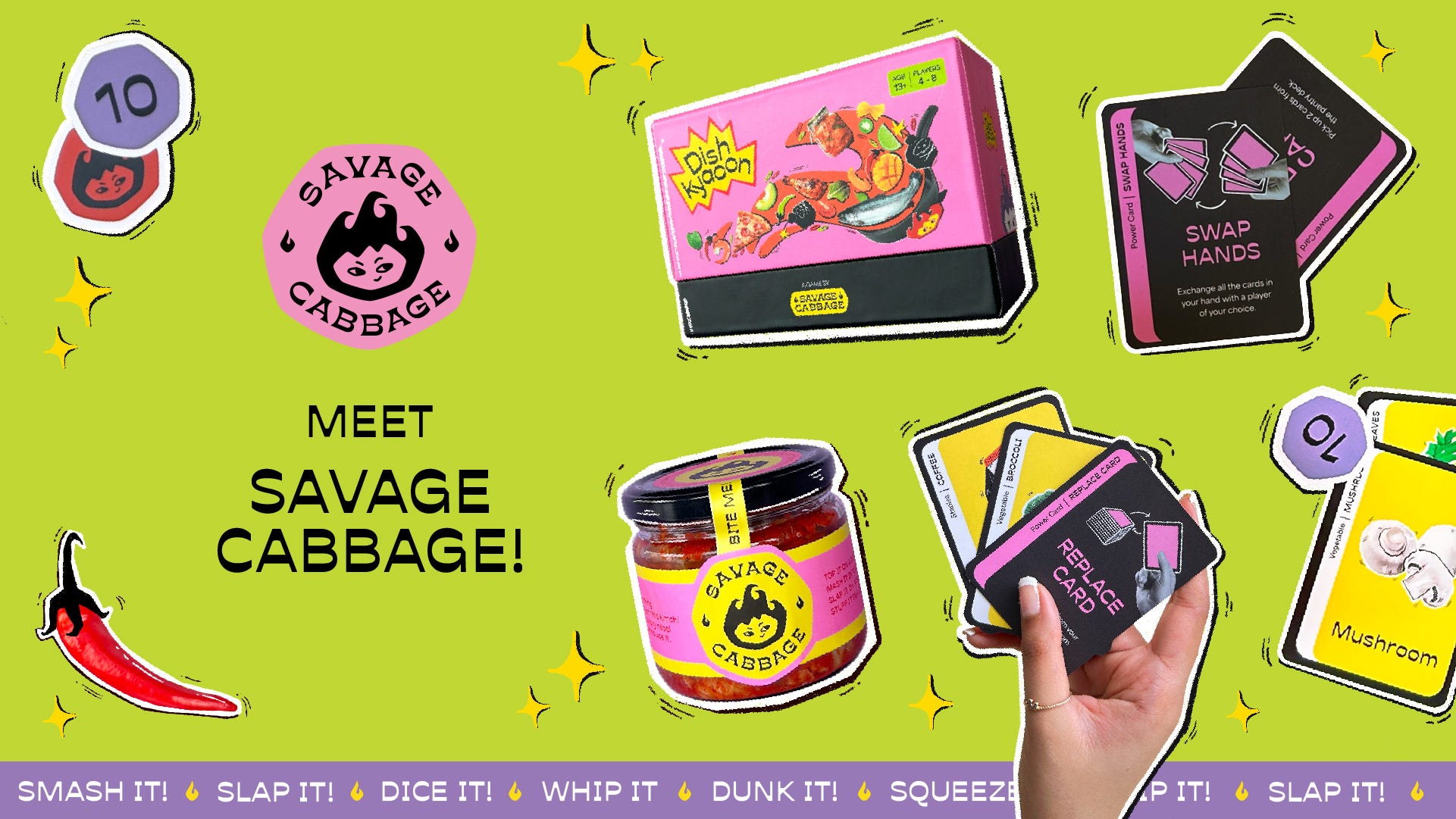
01 / The brief
A cooking game for a kimchi brand.
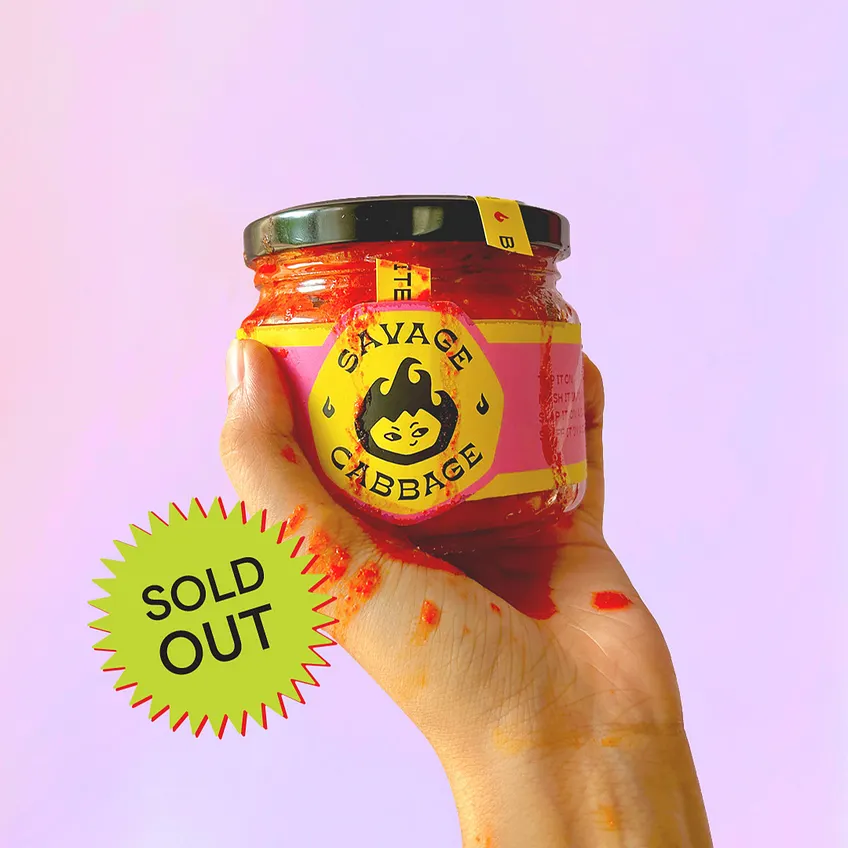
The co-founders of Ladyfingers Co. turned their interest in food into a brand called Savage Cabbage. Its kimchi encouraged people to include something unfamiliar in familiar Indian meals. The game carried that idea into a setting people could share with friends.
The brief was to build confidence to experiment with food. The ingredient mix was meant to resemble an actual fridge, with cooking essentials available to everyone through the pantry. Naming, storytelling and the Dish Don’s tastes left room for the relationships around the table to shape the game.
02 / How it plays
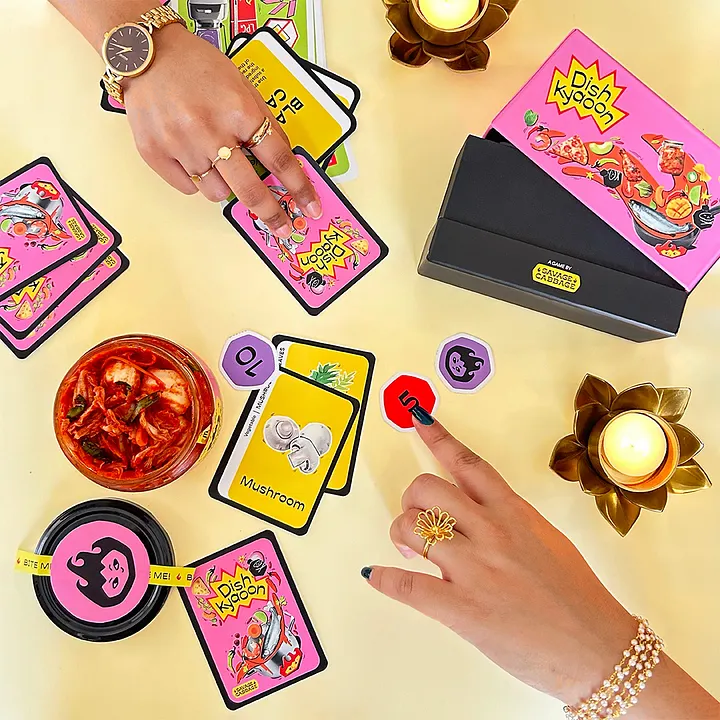
Build a dish. Give it a story.
One player becomes the Dish Don. Everyone else makes a hypothetical dish they think that person would like. Knowing your friends becomes part of the game.
Set the occasion
The Dish Don sets a situation, such as a picnic. Players build a dish suited to that occasion.
Use what you have
Ingredient cards include everyday foods and leftovers, like a bowl of dal. Everyone has unlimited access to pantry essentials such as salt, sugar and oil.
Adapt as you go
Power cards create interaction between players. The Dish Don can introduce disasters or offer help, changing what goes into a dish.
Name it and pitch it
A player calls the game’s name, then everyone presents their dish. Naming and storytelling become part of the Dish Don’s judgement.
03 / Playtesting & balance
Refining the rules around the table.
Over two months, different players tried paper and printed prototypes across repeated rounds. Playtesting helped refine the game structure and mechanics: how many cards each player should start with, how many they could play on a turn, and when a dish was ready to present. It also helped check whether the deck offered ingredients that made sense together. Near the end of development, a larger Savage Cabbage gathering combined food tasting and playtesting.
Disasters introduced entropy by making players rethink their dishes, while favours offered help along the way. The rules left room for the Dish Don to respond to the group, keeping friendships, tastes and personal judgement part of the experience.
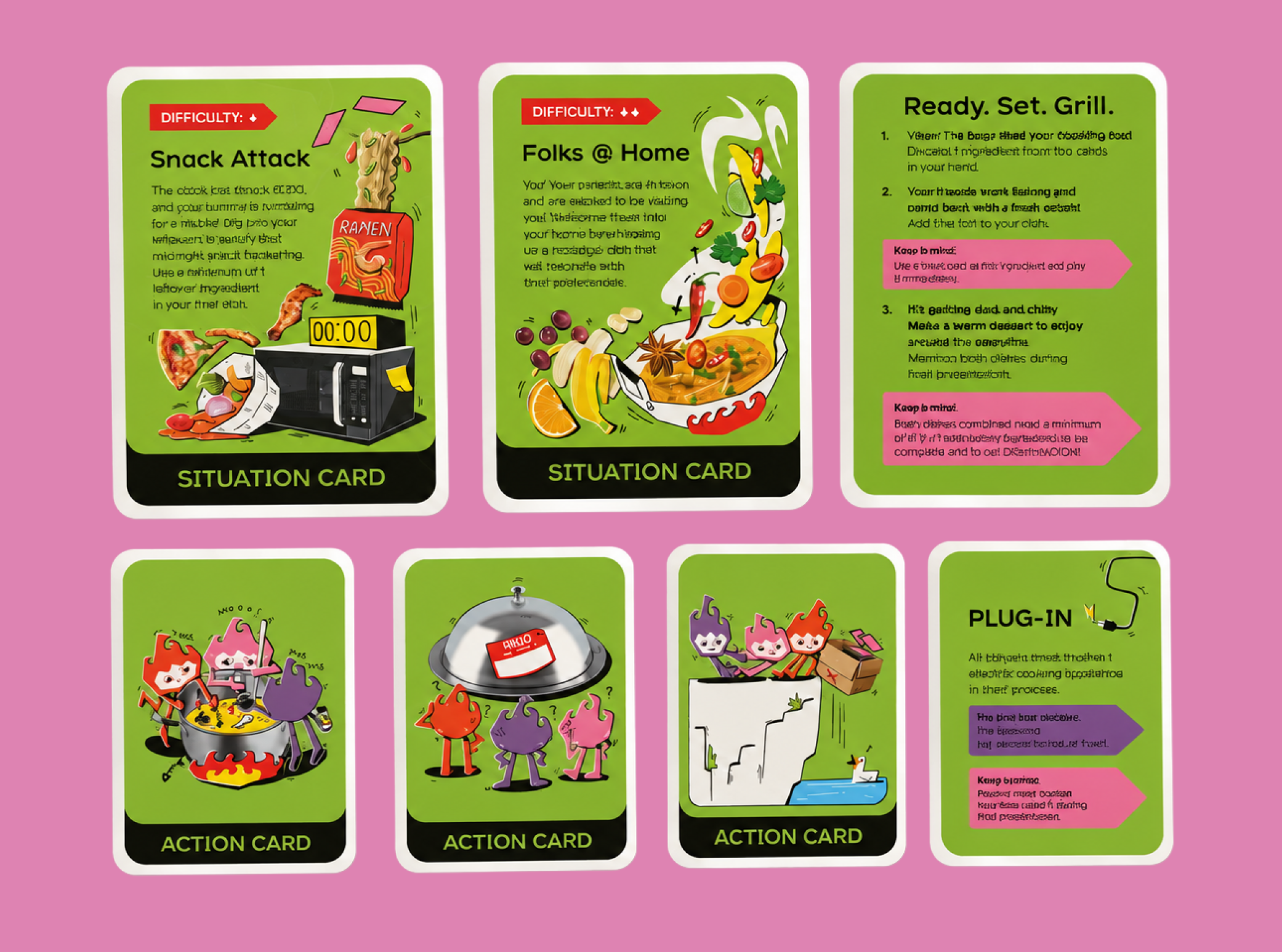
Dish Don’s situation and action cards 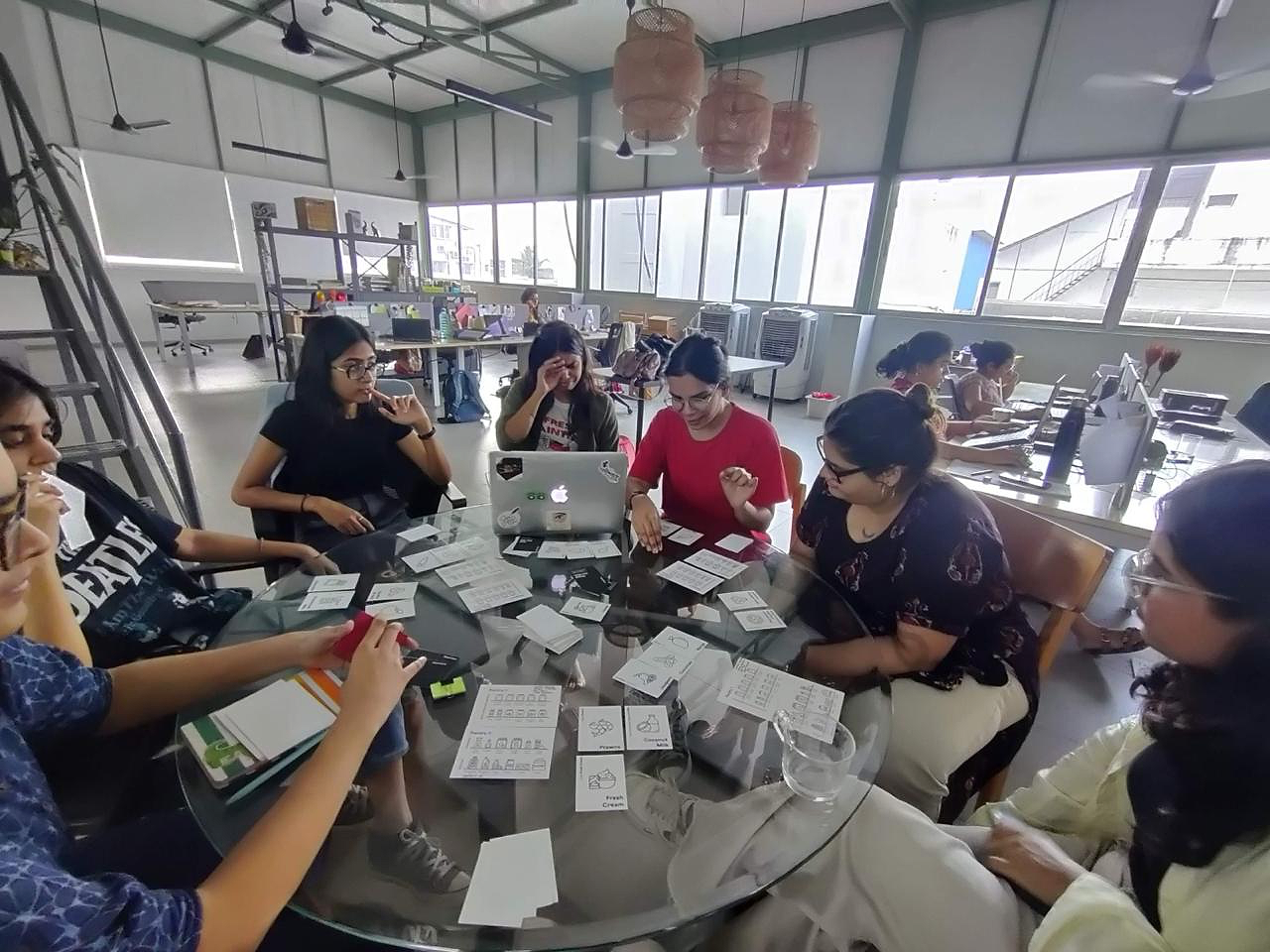
Playtesting with printed prototypes 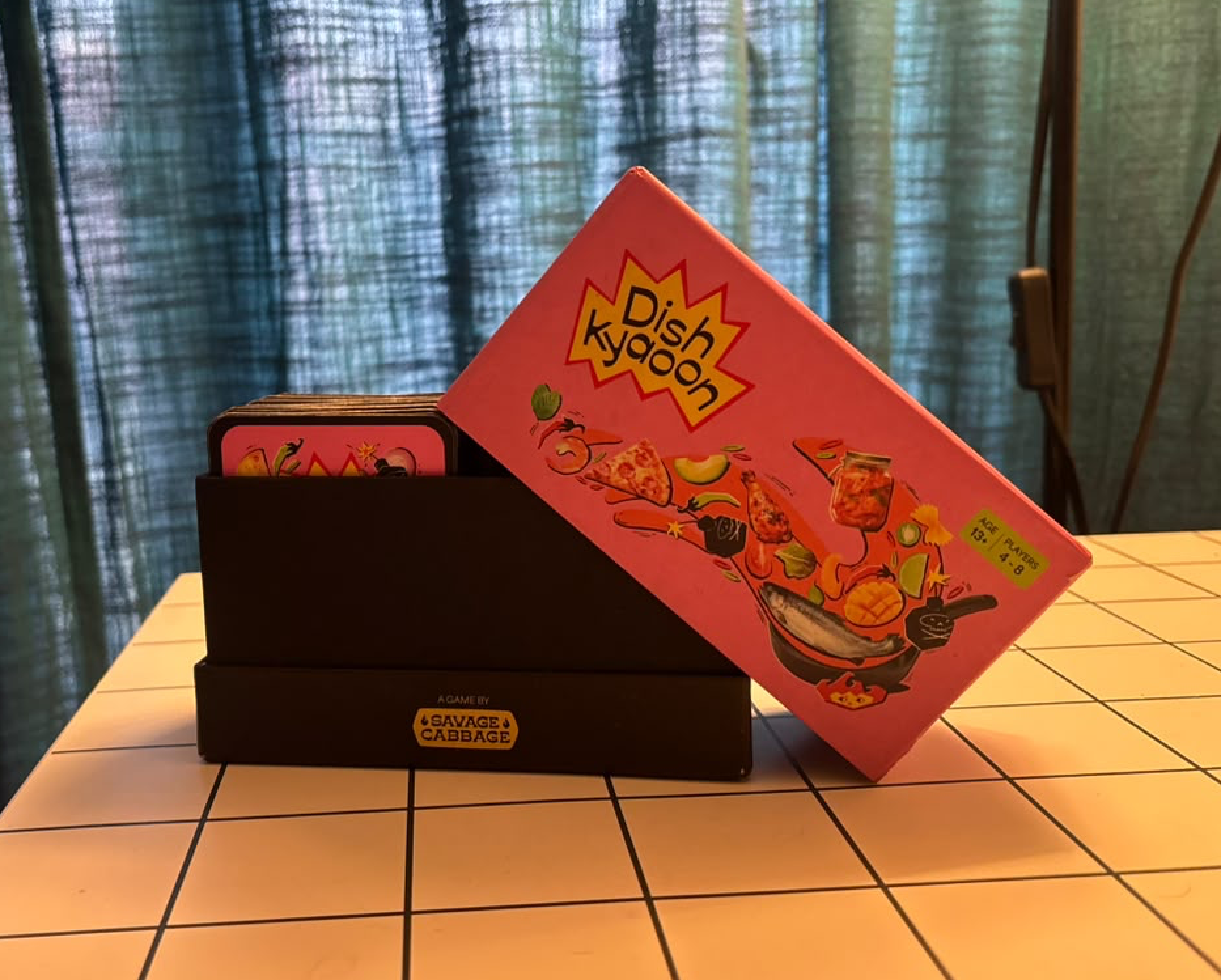
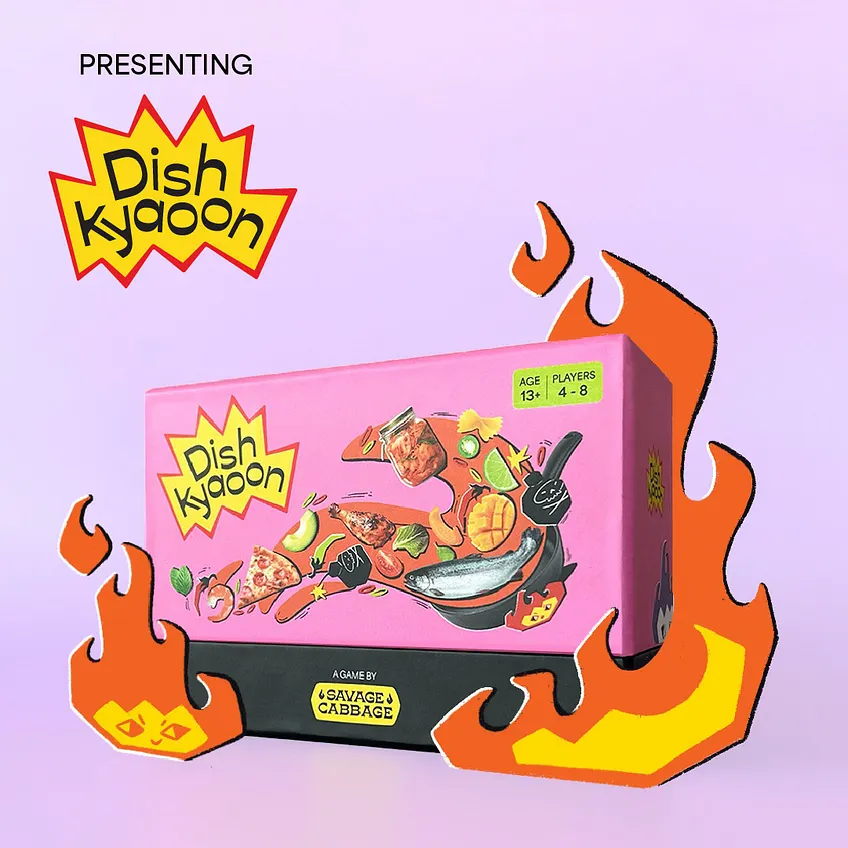
The finished game and its packaging 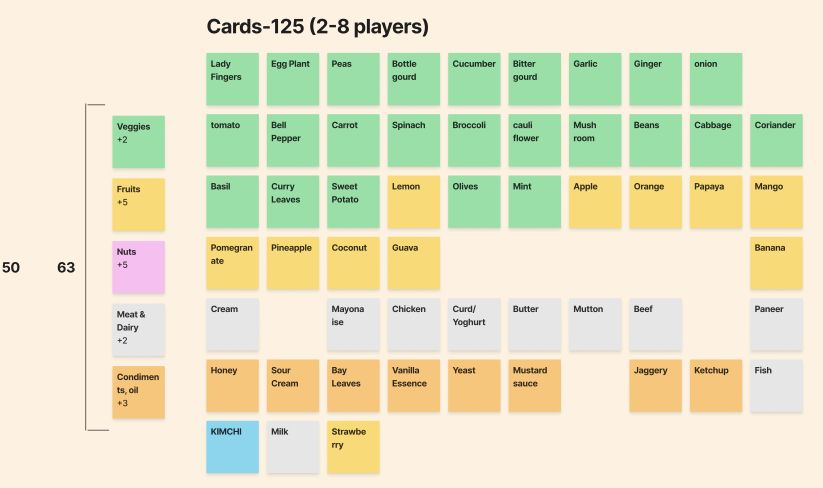
Early ingredient inventory · draft rules 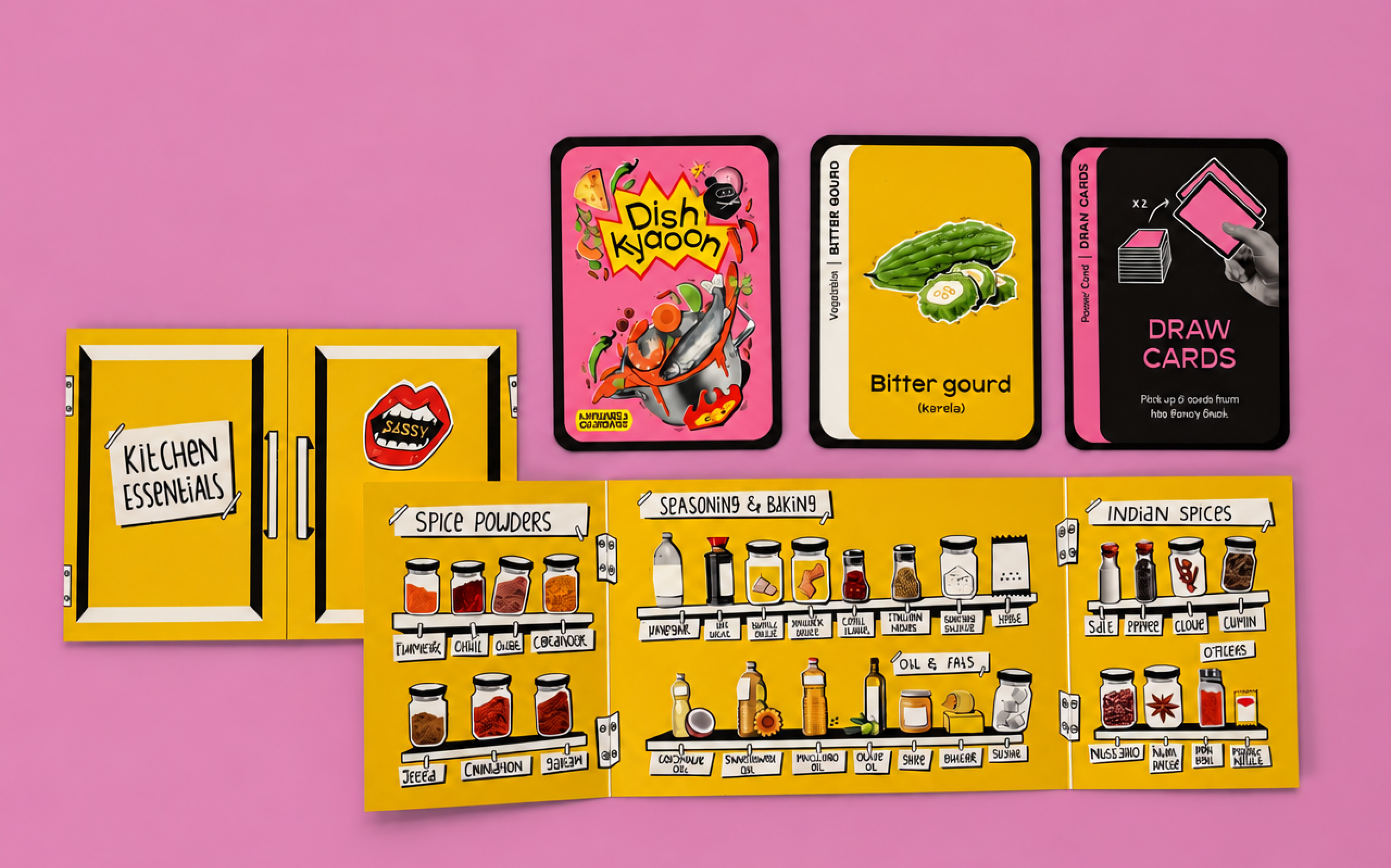
Player cards + pantry cupboard 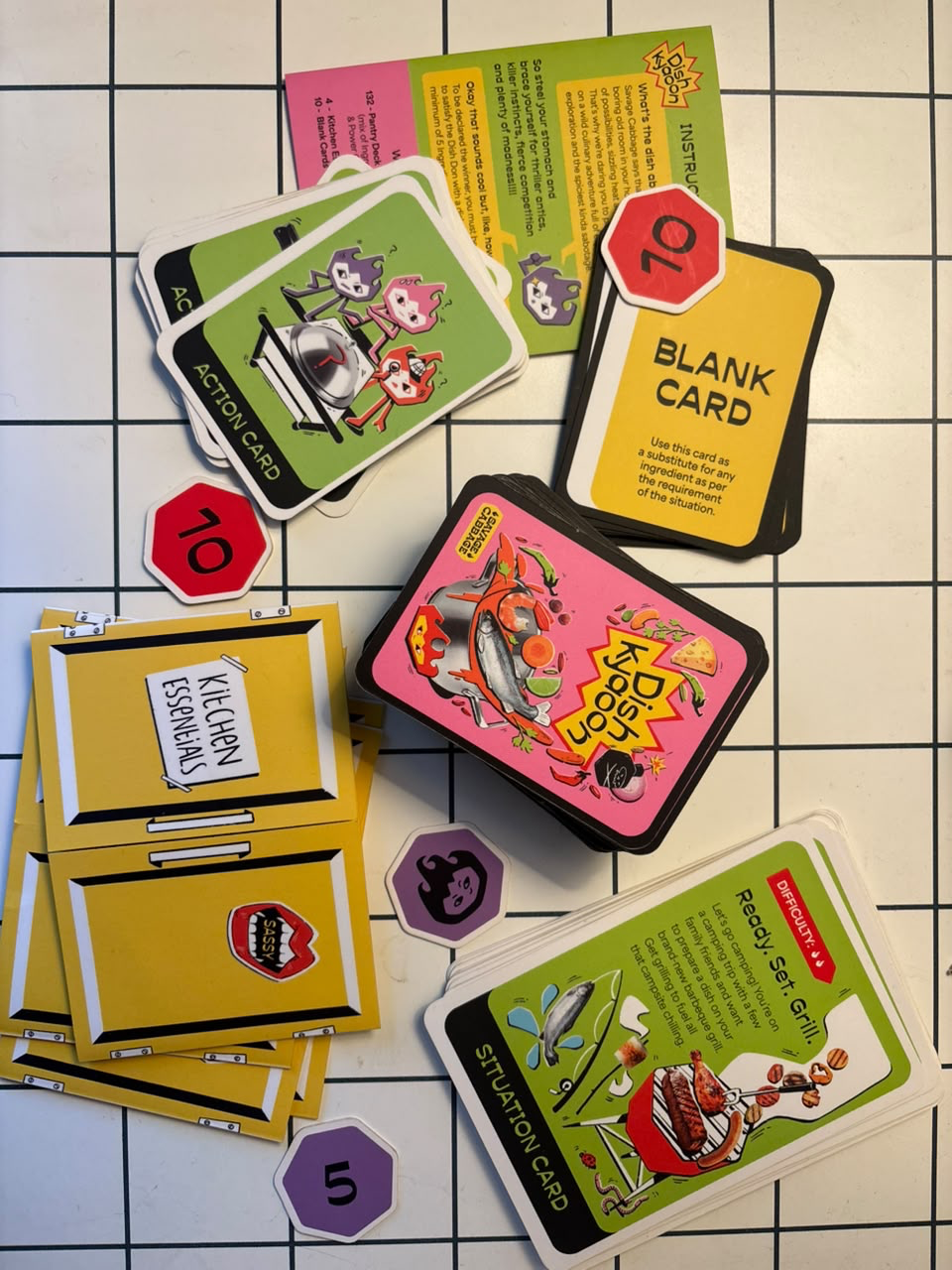
Cards, pantry, tokens and instructions 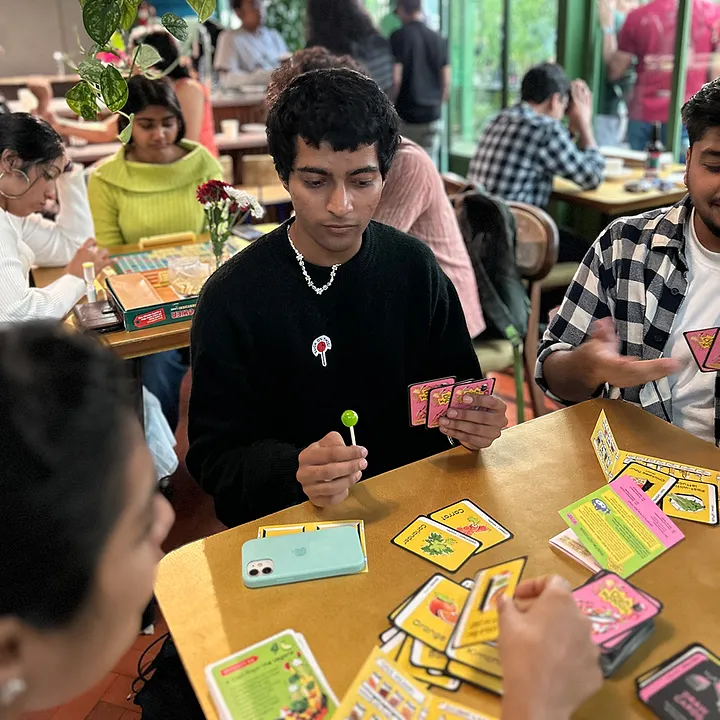
The released game in play
04 / Reflection
Leaving room for the players.
Designing this game expanded how I think about user experience and systems design. On screen, I can guide one action into the next and set boundaries through the interface. With a physical game, the rules have to hold up as people interpret them, improvise, and respond to each other. That leaves many more opportunities for unintended behaviour and edge cases.
Playtesting helped uncover those possibilities and test how the system worked in people’s hands. I learned where the rules needed more clarity and where to leave room for the ideas, stories and personal judgement that made each round different. Knowing when to stop adding rules became a design decision in itself.